

Why Your Garage Door Opener Sounds Like a Freight Train (And How to Quiet It)
It's 6:15 a.m. You hit the button to open the garage and leave for work — and the entire house vibrates. Your garage door sounds like a freight train pulling into the station. The kids are up. The dog is barking. Your neighbor's bedroom window is 20 feet away.
If this sounds familiar, you're not alone. Noisy garage doors are one of the most common complaints I hear from homeowners across the Twin Cities north metro. The good news? Most causes are fixable, and some are simpler than you'd think.
The 6 Most Common Causes of a Loud Garage Door
1. Chain-Drive Opener
If your opener uses a chain drive, noise is baked into the design. Chain drives work like a bicycle chain running along a rail — metal on metal, with every link creating vibration and sound. They're reliable and affordable, which is why they've been the default for decades. But quiet they are not.
The fix: If noise is your main complaint, upgrading to a belt-drive opener is the single biggest improvement you can make. Belt drives use a reinforced rubber belt instead of a metal chain, reducing operating noise by 50–75%. They cost a bit more upfront but last just as long — and your family (and neighbors) will thank you.
2. Worn or Damaged Rollers
Metal rollers running on metal tracks produce a harsh grinding sound that worsens as the rollers wear. Over time, the bearings inside the rollers can seize, turning a smooth roll into a scraping, squealing drag.
The fix: Replace metal rollers with nylon rollers. They're dramatically quieter and don't require regular lubrication. High-quality 13-ball nylon rollers can reduce track noise by up to 75%. This is one of the most cost-effective noise upgrades available.
3. Lack of Lubrication
Dry hinges, springs, and bearings create friction noise — squeaking, grinding, and clicking. Minnesota's climate makes this worse: winter cold thickens lubricants, and summer humidity promotes rust on unprotected metal surfaces. If you haven't lubricated your door's moving parts in the last 6 months, that's likely contributing to the noise.
The fix: Apply a silicone-based or white lithium garage door lubricant to all hinges, roller bearings, springs, and the center bearing plate. Avoid WD-40 — it's a solvent that displaces moisture temporarily but doesn't provide lasting lubrication. A proper lube job takes 10 minutes and makes an immediate difference.
4. Loose Hardware
Your garage door goes up and down roughly 1,500 times a year. That vibration loosens every bolt, nut, and bracket in the system over time. Loose track brackets rattle against the wall. Loose hinge bolts let panels flex and clatter. Even a loose opener mounting bracket amplifies motor vibration through your ceiling and into your living space.
The fix: Tighten everything with a socket wrench — track brackets, hinge bolts, opener mounting hardware. It's a 5-minute job that eliminates a surprising amount of noise. Just don't touch the bottom brackets where the cables attach (those are under spring tension).
5. Vibration Transfer Through the Ceiling
Even a reasonably quiet opener can sound loud inside the house if it's bolted directly to the ceiling framing. Motor vibration travels through the metal bracket, into the wood joist, and straight into your bedroom floor.
The fix: Install a vibration isolation kit between the opener and the ceiling bracket. These rubber mounts absorb vibration before it reaches your home's structure. They cost under $30 and make a noticeable difference — especially in homes where a bedroom sits directly above the garage.
6. Unbalanced Door
When springs lose tension over time, the door becomes unbalanced. The opener works harder to lift the heavier load, straining the motor and creating more noise. You might also hear popping or banging sounds as the springs struggle with the uneven weight distribution.
The fix: Do a balance test — disconnect the opener and lift the door manually to the halfway point. If it doesn't stay put, your springs need professional adjustment. Don't attempt spring work yourself; it's a job for a trained technician.
The Noise Reduction Cheat Sheet
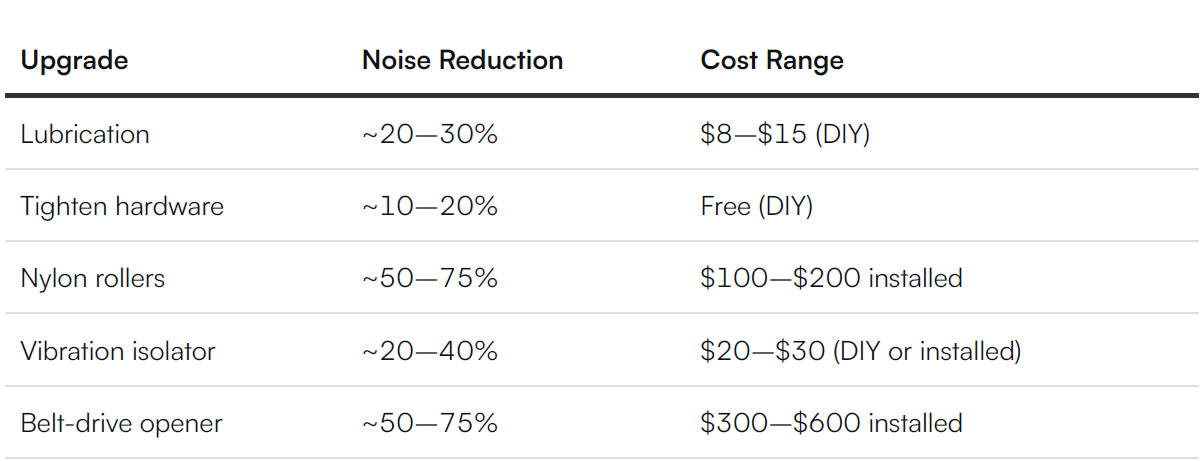
Lubrication is one of the least expensive maintenance items with the highest return on your investment.
